2026-11-14 ·
Storm Flooding in Florida: Protecting Your Home
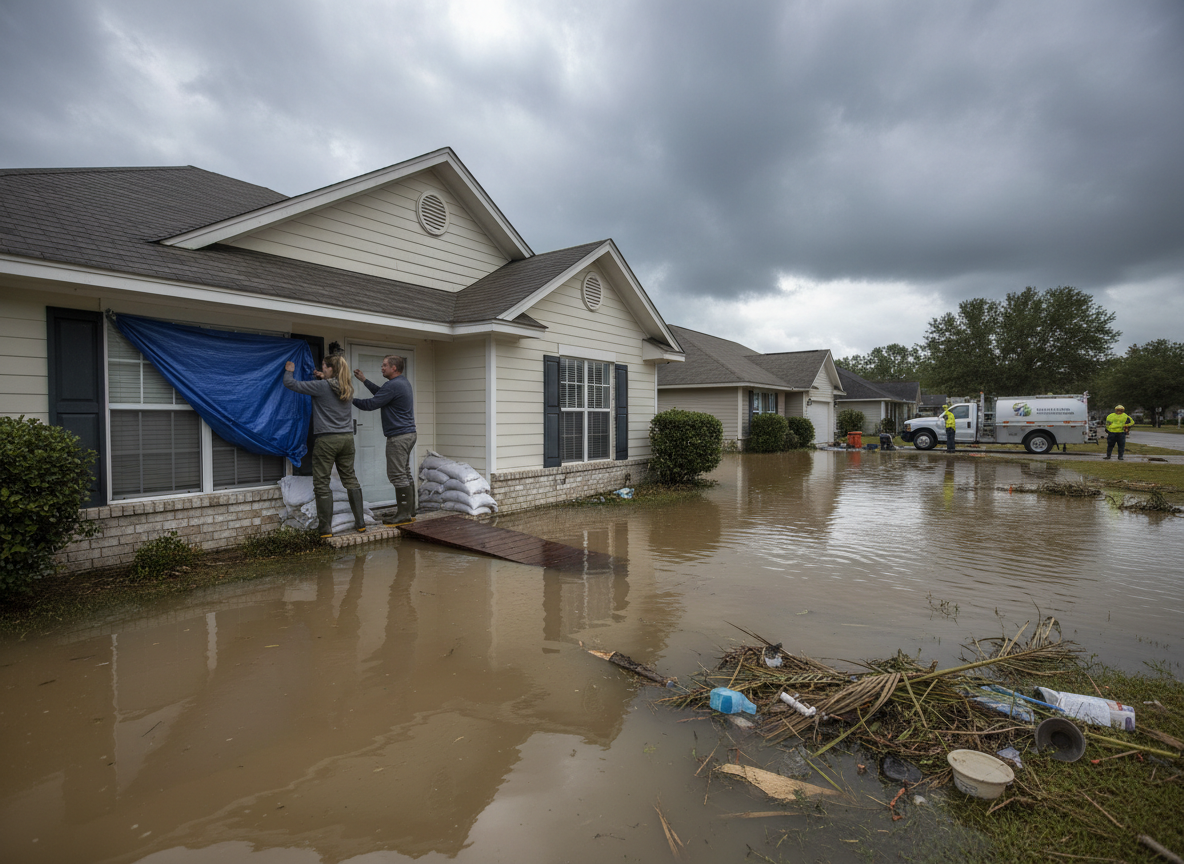
Protecting your home from storm flooding in Florida starts with inspecting roof flashing and sealing around windows before hurricane season reaches counties from Palm Beach to Collier.
Common Causes of Storm Flooding
Hurricanes track across the state and push water into homes along the Atlantic coast near Vero Beach and Sebastian as well as the Gulf side around Punta Gorda and Englewood. Flash floods fill low-lying streets in Ruskin and Belle Glade when rain exceeds drainage capacity. Roof leaks develop when wind lifts shingles during these events, allowing water into attics and ceilings. Appliance and water heater leaks worsen when floodwater reaches ground-level units in homes with crawl spaces common across central Florida counties. High humidity after storms then feeds mold on wet drywall and insulation.
Burst supply lines inside walls add to the water load when pressure surges during storms hit areas like Cocoa and Stuart. AC condensate drains clog with debris and overflow onto floors in Naples and Marco Island properties. These sources combine when a hurricane stalls and drops repeated inches of rain over several days.
What to Check After Heavy Rains
Walk the perimeter and look for water stains on ceilings or baseboards in rooms facing the prevailing wind. Check crawl spaces under homes in Lutz and Holiday for standing water that can rise above floor joists. Test doors and windows for gaps where wind-driven rain entered during the last event. Examine the attic for wet insulation near roof penetrations in older homes built before modern code updates in Palm Beach County. Move stored items off concrete slabs in garages that sit in known flood zones near New Port Richey.
Look inside cabinets under sinks and around water heaters for new moisture after storms pass through Tarpon Springs and Hudson. Note any musty smell that signals early mold growth in humid conditions that persist for weeks along the coast.
Typical Cost Ranges for Restoration
Water extraction and drying after storm flooding runs $800 to $2,500 when only one room is affected and moisture has not reached subfloors. Full-home cleanup that includes mold treatment in crawl spaces costs $3,000 to $7,500 depending on square footage and how long water sat before removal. Roof leak repairs tied to water damage restoration add $1,200 to $4,000 when multiple ceilings require drywall replacement in homes near Jensen Beach and Hobe Sound. Prices rise when dehumidifiers must run for more than five days because Florida humidity stays above 70 percent after a storm.
Homeowners in flood-prone zones around Palmetto and Englewood often face the higher end of these ranges when multiple sources such as roof and appliance leaks occur together.
When to Arrange Service
Call for water damage restoration once visible water is removed but moisture readings remain above 15 percent on drywall or wood. Early intervention prevents mold colonies from forming within 48 hours in the warm, damp air that follows hurricanes across the state. A technician arrives to measure moisture in walls and floors, then provides a written estimate before any drying equipment is placed. This step matters in counties where repeated storms can saturate the same materials season after season.